Bachata
Example Patterns
See where you’ll be by the end of our class syllabus!
-
Date/Time:
Wednesdays, 7:00 - 8:00 PM
Class Description:
In this welcoming and inclusive class, we (Nick and Loretta) will guide you through the fundamentals of Salsa and Bachata. We dedicate the first 30 minutes to Salsa and the second 30 minutes to Bachata.
Don't worry if you're not flexible or if you think you have two left feet – this class is designed for beginners and our supportive community will make you feel right at home.Once we are warmed up, we will begin our partnerwork. We will break down the movements step by step, allowing you to grasp the techniques and rhythm gradually. You'll be surprised at how quickly you'll pick it up and start moving with confidence!
Contact Us for Class Syllabus or to answer any questions.
-
Date: Mondays
Time: 7:00 PM - 8:00 PM
Confirm class level before coming: Confirm with the instructor that the class you chose is appropriate for your experience level.
Class Description:
This class is designed for dancers who have already mastered the basics of Bachata and are ready to take their skills to the next level. Whether you've been dancing Bachata for a while or have recently graduated from our Beginner Bachata Class, this intermediate level is perfect for advancing your techniques, exploring new moves, and deepening your connection with the music.
During the class, we will focus on connecting with your dance partner. Bachata is known for its close embrace and intricate partner work, and we want you to feel comfortable and connected with your fellow dancers. We will teach you how to communicate through movement and express your emotions while flowing harmoniously with your partner.
Throughout the class, we will provide personalized feedback and tips to help you improve your technique and style. We want you to feel empowered and inspired to incorporate your own unique flair into the dance.
Contact Us for Class Syllabus or to answer any questions.
-
Date: Wednesdays
Time: 8:00 PM - 9:00 PM
Confirm class level before coming: Confirm with the instructor that the class you chose is appropriate for your experience level.
Class Description:
This class is designed for dancers who have already mastered the basics of Bachata and are ready to take their skills to the next level.
Throughout this class, you will learn the art of body isolations, enhancing your ability to communicate emotions and enhance the connection with your partner. You will also discover the subtle nuances of musical interpretation, enabling you to dance harmoniously to the rhythm and melodies of Bachata music. Building on your knowledge of the basic turns and dips, you will be introduced to more intricate partnering techniques, allowing for a smooth transition between different dance styles and variations.
Contact Us to answer any questions.
Dance Technique
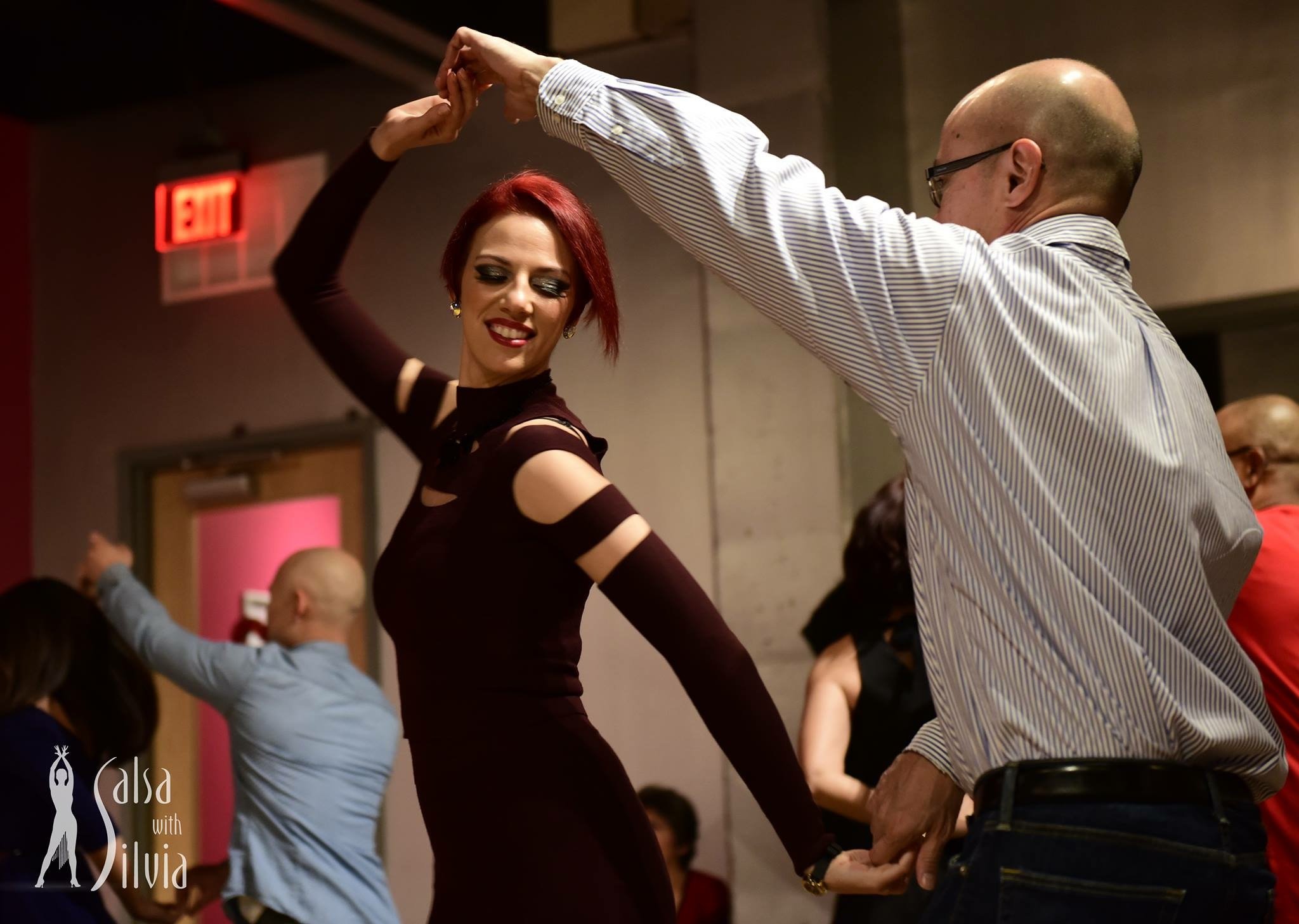
Posture and Body Alignment:
A strong and balanced posture is essential in bachata. Keep your chest lifted, shoulders relaxed, and engage your core. Maintain a slight forward tilt of your pelvis and allow your hips to move freely. This alignment establishes a strong foundation for executing various moves with ease.
Correct Weight Distribution:
Proper weight distribution plays a vital role in executing smooth and fluid movements in Bachata. As a leader, you need to maintain a centered weight distribution, enabling you to lead your partner with clarity and control. As a follower, you should respond to your partner's lead by maintaining a light connection, evenly distributing your weight and staying responsive to changes in direction.
Connection and Musicality:
At the heart of bachata lies the connection between partners, a vital element that enhances the dance's emotion and musicality. Lead and follow roles intertwine, establishing a strong connection through the chest or upper body. Couples move as one, with the lead guiding and the follow responding intuitively to the music's rhythm and melody. It is this connection that breathes life into bachata, allowing dancers to express raw emotion and tell a story through their movements.
The Three Basic Steps:
Bachata's basic steps form the foundation of the dance, allowing dancers to explore intricate footwork patterns while maintaining the fluidity of movement. The connection to your partner remains constant as we learn to navigate these three basic steps.
1. The Basic step
2. The Stationary step
3. The Sway step
Incorporating Turns, Cradles, and Dips:
Once you've mastered the basic steps and embraced the sensuality of bachata, it's time to delve into more dynamic variations. These include turns, cradles, and even dips, allowing you to showcase your dance partner's trust and connection. Executing these moves accurately requires practice and a solid grasp of your partner's body positioning and weight distribution.
Sensual Body Movements:
Bachata's essence lies in its sensuality, which is expressed through deliberate hip movements and body isolations. While maintaining the connection with your partner, we teach you to incorporate these essential body movements into your dance:
1. Hip rolls
2. Body rolls
3. Ribcage Movement
Embracing the Essence of Bachata:
Mastering bachata's technique requires more than just mastering steps; it involves embodying the essence of the dance. It's about immersing yourself in the music, connecting with your partner, and expressing emotion through every movement. Bachata provides the canvas, and as dancers, we paint the picture of love, desire, and connection on its rhythmic and passionate echoes.

Bachata, the captivating and sensual dance that originates from the Dominican Republic, has a rich history woven with cultural influences, vibrant rhythms, and passionate movements. This popular social dance, which has captured the hearts of people around the world, began as an expression of love, longing, and the realities of everyday life for the people of the Dominican Republic.
Origins and Influences
The birth of bachata can be traced back to the early 20th century, emerging from the rural areas and urban shantytowns of the Dominican Republic. Its roots are deeply connected to the Bolero, a Cuban genre of music and dance. The influences of Cuban Son, Merengue, and other Afro-Caribbean rhythms can also be felt in the development of bachata.
Humble Beginnings
Initially considered a lower-class and marginalized art form, bachata was often looked down upon and criticized for its sensual movements and themes. It found its home in small rural towns and the outskirts of major cities, where it was performed in local bars and informal settings. This humble beginning fostered a sense of intimacy and nostalgia in the dance.
Transformation and Popularity
During the 1960s and 1970s, bachata gained popularity and started to evolve with the inclusion of electric guitars and other contemporary instruments. This transformation propelled bachata into the mainstream, capturing the attention of a wider audience both within the Dominican Republic and beyond.
Global Influence
The 1980s marked a turning point in the history of bachata, as artists like Juan Luis Guerra and Luis Vargas, among others, brought the genre into the limelight. By incorporating elements of other music genres, such as jazz and R&B, these pioneers elevated bachata to new heights. The catchy melodies and heartfelt lyrics resonated with audiences, allowing bachata to gain international recognition and acceptance.
Dance Style and Techniques
Bachata dance is characterized by its sensuality, fluidity, and intimate connection between partners. The dance is performed in a close embrace, with partners interpreting the music and expressing their emotions through rhythmic body movements, intricate footwork, and playful hip motions. The contagious rhythms of bachata, typically structured in a four-beat pattern, provide a foundation for a range of creative and improvised moves.
Evolution and Fusion
Like any dance form, bachata continues to evolve, embracing various influences and fusion with other styles. Today, there are multiple interpretations of bachata, such as Traditional, Modern, Sensual, and Urban, each offering unique choreography and expression. These variations have further propelled the popularity of bachata, attracting dancers worldwide and inspiring countless dance competitions and festivals.
A Global Phenomenon
In the early 21st century, bachata became a global phenomenon, gaining a dedicated following from dance enthusiasts of all ages and backgrounds. Its infectious rhythms and passionate movements transcend cultural boundaries, bringing people together on dance floors around the world. From social gatherings to professional performances, bachata has undoubtedly found its place in the hearts and minds of dancers across continents.
Preserving the Legacy
As bachata continues to evolve and flourish, it's important to remember and honor its humble origins. Through dance schools, cultural events, and the ongoing mentorship of seasoned bachata dancers, efforts are being made to pass down the history and essence of this beautiful dance to future generations.
The history of bachata is a testament to the resilience and power of dance as a means of cultural expression. As it journeys through time, it remains deeply rooted in the hearts of the Dominican people and has become an integral part of the global dance community's tapestry. So, let's embrace the sensuality, expressiveness, and intoxicating rhythms of bachata, as we dance our way into its vibrant and captivating history.